Tech Expo Shows What China Can Make, but Not Who’ll Buy It All — Explore China’s manufacturing might vs global demand amid shifting trade.
Trade fairs and technology expos in China have become windows into the country’s industrial ambition. They reveal what China can make — from advanced robotics and smart factories to AI-powered devices and green energy systems. But they rarely answer a bigger question: who will actually buy all that output?
The title “Tech Expo Shows What China Can Make, but Not Who’ll Buy It All” captures that tension. In this article, we examine how recent Chinese technology exhibitions highlight manufacturing prowess while pointing to persistent uncertainties in global demand, supply chains, and market dynamics.
We’ll explore:
- What these expos reveal about China’s manufacturing strength
- The gap between product showcase and real orders
- The risks from trade friction, oversupply, and buyer hesitation
- What this means for companies, importers, and global tech markets
Let’s dive in.
What Tech Expos in China Reveal
High-Tech on Full Display
China’s top tech fairs—like the China Hi-Tech Fair (CHTF), the China Information Technology Expo (CITE), and NEPCON China—are showcases of transformation.
At these events, you’ll see:
- AI systems, robotics, smart home devices, and IoT platforms
- Semiconductor equipment, chip packaging, and sensors
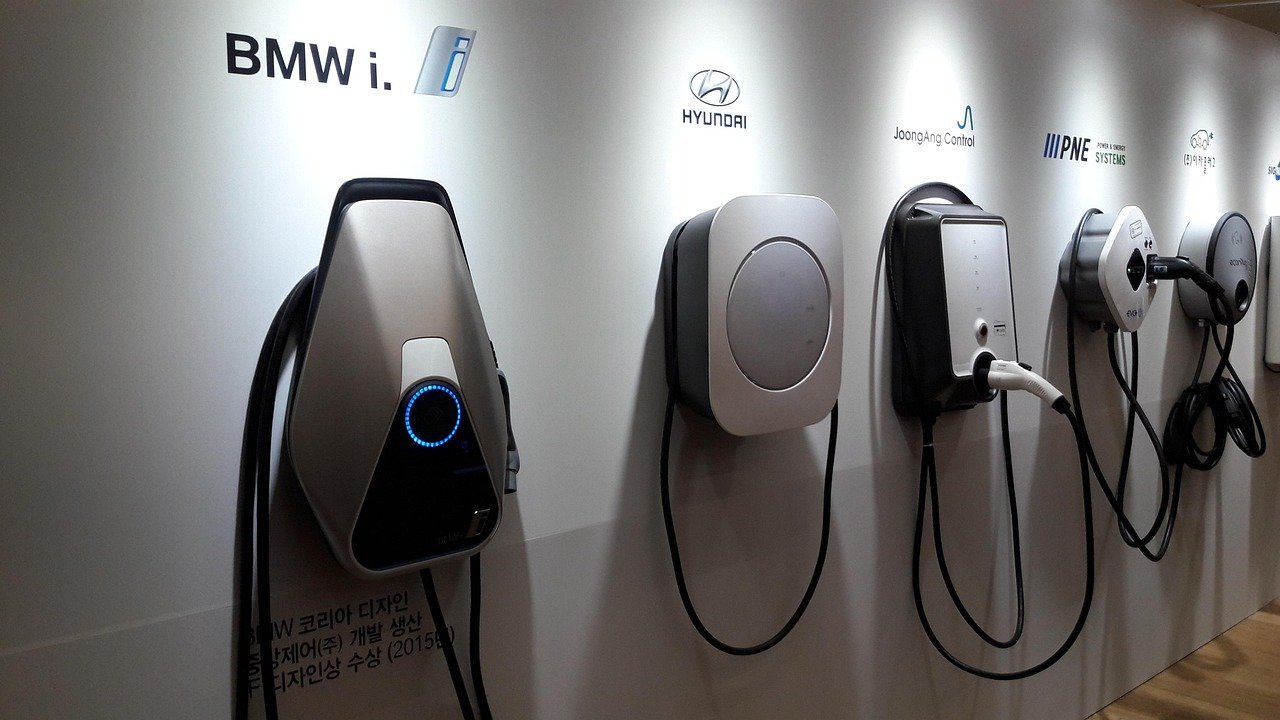
- Green energy solutions: solar modules, battery storage, EV tech
- Industrial automation, precision manufacturing, and smart tooling
For example, NEPCON China is a major venue for electronics, microelectronics, and circuit board equipment.
CITE in Shenzhen is a broad platform for electronic information and innovation.
CHTF, carrying both research and commercialization themes, draws thousands of exhibitors and international participants.
These expos send a powerful message: China is no longer a low-end factory, but a rising competitor in high-tech manufacturing.
The Art of Showmanship — But Is It Real?
However, trade expos are often more about optics than actual sales. They serve multiple functions:
- Branding and signaling: Firms want to show capability, attract investors, and build reputation.
- Prototype unveiling: Many exhibits are concept devices, pilot projects, or one-off prototypes.
- Lead generation: Exhibitors collect interest, contact info, and preliminary inquiries—only a fraction convert into orders.
- Government & media showpieces: Local governments use exhibitions to highlight economic zones, incentives, and innovation agendas.
Thus, the fact that a product is present at a Chinese expo doesn’t guarantee it’s commercially viable or globally competitive.
The Missing Buyer — Demand and Order Uncertainty
Domestic Weakness, Export Pressure
One reason demand remains uncertain: domestic consumption in China is sluggish. The post-zero-COVID rebound has been uneven, and many industrial sectors are facing overcapacity and weak internal orders. In many manufacturing segments, factories are cutting prices just to keep cash flowing.
To compensate, exporters are pushing more aggressively into foreign markets. But that introduces more risk — exporting to markets under trade tensions or logistics bottlenecks.
Trade Barriers and Geopolitical Headwinds
China’s tech exports face heavy headwinds. In particular:
- Tariffs and export controls: Chinese shipments to the U.S. dropped sharply under new tariffs.
- Regulatory constraints: Some foreign governments restrict buying or usage of Chinese tech in sensitive areas (e.g., telecom, surveillance, semiconductors).
- Supply chain realignment: Buyers in Europe, the U.S., and elsewhere are diversifying away from China, seeking resilience and supply-chain sovereignty.
- Political risk: Sanctions, national security reviews, and diplomatic tension make buyers more cautious.
Even as China displays chips and AI models at expos, many buyers are deterred by regulatory uncertainties or concerns about IP, trust, or auditability.
Overcapacity and Profit Margins Under Pressure
China’s manufacturing base is vast, and many sectors already struggle with overcapacity. Exhibiting more products at trade shows is one way to absorb inventory and keep factories running. But that pushes margins lower.
Firms may show sophisticated products at low margins or even losses, relying on scale or government subsidy. That raises the question: will buyers support such pricing in the long run?
Case Studies & Signals from Recent Events
Canton Fair’s “Low-Price” Narrative
At China’s largest trade expo (the Canton Fair), the 2024 edition was dominated by “low price” themes. Many exhibitors slashed markups to attract international buyers amid weakening demand.
Yet, organizers and participants also noted declining interest from U.S. and European buyers—raising doubts whether those low-priced products would actually find buyers in needed quantities.
Nvidia’s Presence at China Expo
Interestingly, U.S. chip giant Nvidia decided to attend a Chinese supply-chain expo for the first time in 2025, despite U.S. export controls.
This is symbolic: even when buyers are constrained, firms want to signal presence, engage local partners, and keep channels open. But the expo itself is unlikely to generate large orders when geopolitical crosstalk looms.
AI and Robotics at WAIC and Beyond
At the World Artificial Intelligence Conference, China showcased over 800 companies with robots, flying taxis, and AI platforms.
The spectacle emphasized R&D depth, but in many cases, deployment remains limited. The risk: some of these innovations are too early-stage or niche to command widespread buyer adoption just yet.
Why “Show What You Can Make” But Not “Who’ll Buy It All”?
Supply vs Demand Imbalance
Trade expos reflect supply — the factory’s ability to produce. But demand from global buyers is a different variable, influenced by macroeconomics, regulation, and geopolitics.
You can showcase thousands of gadgets, but if buyers decline to commit (or their governments block them), production ends up sitting in warehouses.
Timing Lag between Innovation and Commercialization
Many technologies shown at expos are still immature. It takes time to scale, test, certify, localize, and market. The demo stage doesn’t guarantee repeatable mass production or market fit.
Buyer Inertia & Trust Barriers
Buyers often hesitate to commit until proofs of performance, warranties, service networks, supply reliability, and regulatory acceptability are in place. China’s tech branding still grapples with trust and IP reputation in some markets.
Overexuberance and Speculation
Exhibitions can feed hype. Observers may overestimate adoption speed or underestimate the friction in cross-border deals. Some projects might never exit pilot phases.
Implications for Stakeholders
For Chinese Manufacturers & Startups
- Focus on credibility, after-sales service, trust-building, and compliance, not just product specs.
- Target markets with fewer regulatory barriers (Asia, Africa, Latin America) first.
- Offer pilot programs, local partnerships or joint ventures to reduce buyer risk.
- Don’t rely solely on exports—develop robust domestic demand and diversified channels.
For International Buyers & Importers
- Use exhibitions as a scouting tool, not a commitment engine.
- Request samples, audits, factory visits, and certifications before large orders.
- Be wary of “too good to be true” pricing — low margin or subsidized pricing may mask quality or reliability risk.
- Consider geopolitical and trade risk — your exposure in China-based supply chains might invite strategic pressure.
For Policy Makers and Trade Analysts
- Understand that exhibitions are leading indicators of capacity, but not demand.
- Monitor conversion rates from leads to actual orders, especially across jurisdictions.
- Support transparency, standards, and dispute resolution to ease international buyer concerns.
- Encourage diversification of markets and suppliers to reduce geopolitical risk.
Strategies to Bridge the Gap
Here are four actionable strategies to help convert showcase into sales:
- Pre-qualify buyers
Use matchmaking services at expos, vet buyers, and filter for serious parties with capital and market access. - Offer small pilot orders with buyback guarantees
Reduces buyer risk and builds trust before scaling. - Build local presence or partnerships
Establish a regional office, distribution partner, or joint venture to reassure buyers and guarantee support. - Focus on niche strengths with defensibility
Rather than trying to compete in commodity electronics, concentrate on domain leadership: specialized sensors, industrial robotics, or AI frameworks where switching costs are high.
Conclusion
Tech expos in China vividly show “what China can make” — the depth of its industrial base, the rapid iteration of its innovations, and the boldness of its ambitions. But they don’t reliably tell “who will buy it all.” The real test lies in global orders, buyer trust, regulatory acceptance, and demand sustainability.
The tension between supply and demand is becoming more acute as global geopolitical uncertainty, trade barriers, and shifting sourcing strategies reshape the landscape. For manufacturers and buyers alike, success depends on bridging that gap—turning seas of exhibits into pipelines of committed orders.
If you want to stay ahead in global supply chains or source cutting-edge Chinese tech with minimal risk, sign up for our newsletter. We’ll deliver insights, vetted supplier leads, and trade-intelligence directly to your inbox.