Korean Weight Loss Diet A Realistic Korean Diet Plan for Sustainable Fat Loss
A korean weight loss diet with Korean-style meals, smart portions, and simple habits to lose weight sustainably without crash diets.

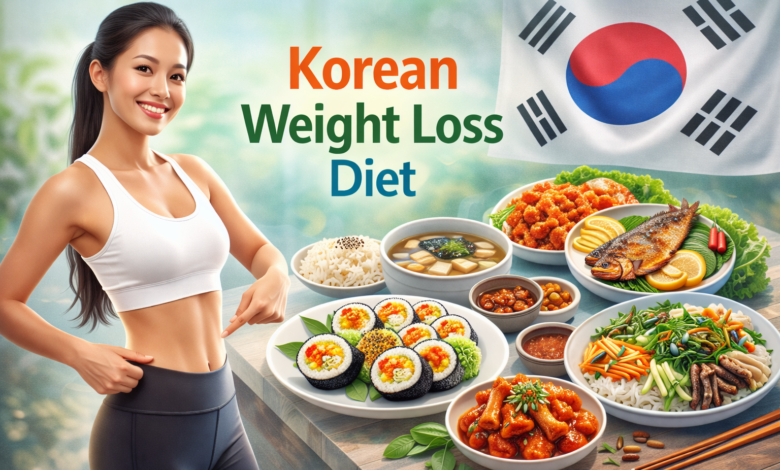
Korean weight loss diet that actually feels doable, you’re in the right place. Korean-style eating is often built around vegetables, satisfying soups, fermented foods, and balanced plates rather than giant portions of ultra-processed snacks. That combination can make fat loss feel less like punishment and more like a normal way to eat. The goal isn’t to “eat only Korean food” or copy extreme celebrity routines. It’s to use the smartest parts of Korean food culture—volume eating with vegetables, protein-forward meals, and flavor-packed condiments—to create a steady calorie deficit you can keep up for weeks and months. Done right, a korean weight loss diet supports energy, keeps cravings calmer, and makes healthy eating feel enjoyable instead of restrictive.
Korean weight loss diet: What It Is and Why It Works
A korean weight loss diet is not a single strict menu. It’s a practical approach to fat loss inspired by common patterns in Korean meals: a base (often rice or another grain), a protein, plenty of vegetables (often as side dishes), and brothy soups or stews. Many Korean dietary guidelines also emphasize variety across food groups and choosing foods lower in salt, sugar, and fat while staying active.
What makes this approach especially helpful for weight loss is that it can naturally lower calorie intake without forcing tiny meals. High-volume vegetables and broth-based dishes can help you feel full, while lean proteins support muscle and reduce the urge to snack endlessly.
To be clear, you can gain weight eating Korean food too—fried chicken, sugar-heavy drinks, and huge bowls of noodles can absolutely push you into a surplus. The “works” part comes from the pattern: balanced plates, smart portions, and mostly minimally processed foods.
Why Korean-Style Eating Supports Fat Loss
Vegetables and “volume eating” without feeling deprived
A lot of Korean meals include multiple vegetable dishes—fresh, blanched, sautéed, or lightly seasoned. This matters because lower-calorie, fiber-rich foods help you feel full on fewer calories. The CDC specifically highlights that fiber-rich foods like fruits and vegetables can fill you up without adding many calories, which supports slow, steady weight loss.
When you build your korean weight loss diet around vegetables first, your plate looks big, your stomach feels satisfied, and your calorie intake often stays controlled without obsessive tracking.
Fermented foods and gut-friendly habits
Fermented foods are a well-known part of Korean cuisine. Kimchi, in particular, contains beneficial microbes when it’s unpasteurized and handled properly. Mainstream nutrition sources commonly list kimchi among probiotic-rich foods.
More importantly for weight loss, human research has explored kimchi’s potential role in body composition and metabolism. For example, a Health.com summary of a controlled trial reported reductions in body fat in participants consuming kimchi powder compared with placebo. And scholarly reviews and studies continue to examine kimchi consumption and obesity-related outcomes.
This doesn’t mean kimchi is a magic fat-burner. Think of it as a “supporting actor” that can make healthy meals more enjoyable and potentially support gut health—both of which can help adherence.
Balanced plates, not “one-food” diets
The most sustainable Korean-inspired weight loss comes from balanced meals, not extreme restriction. Korean dietary guidance highlights eating a variety of food groups, not skipping breakfast, and avoiding overeating. That’s a very different idea from the internet’s viral K-pop diet or “one-food diet” trends. Extreme low-calorie approaches can have medical risks and—when used clinically—are often managed with professional supervision.
The science still follows the same rule: a calorie deficit
No matter how “clean” your food is, fat loss still depends on energy balance: taking in less energy than you use over time. That principle is well-established in nutrition science. The good news is a korean weight loss diet can make that deficit easier because meals are flavorful, filling, and naturally portion-friendly when built the right way.
Core Foods for a Korean Diet Plan for Weight Loss
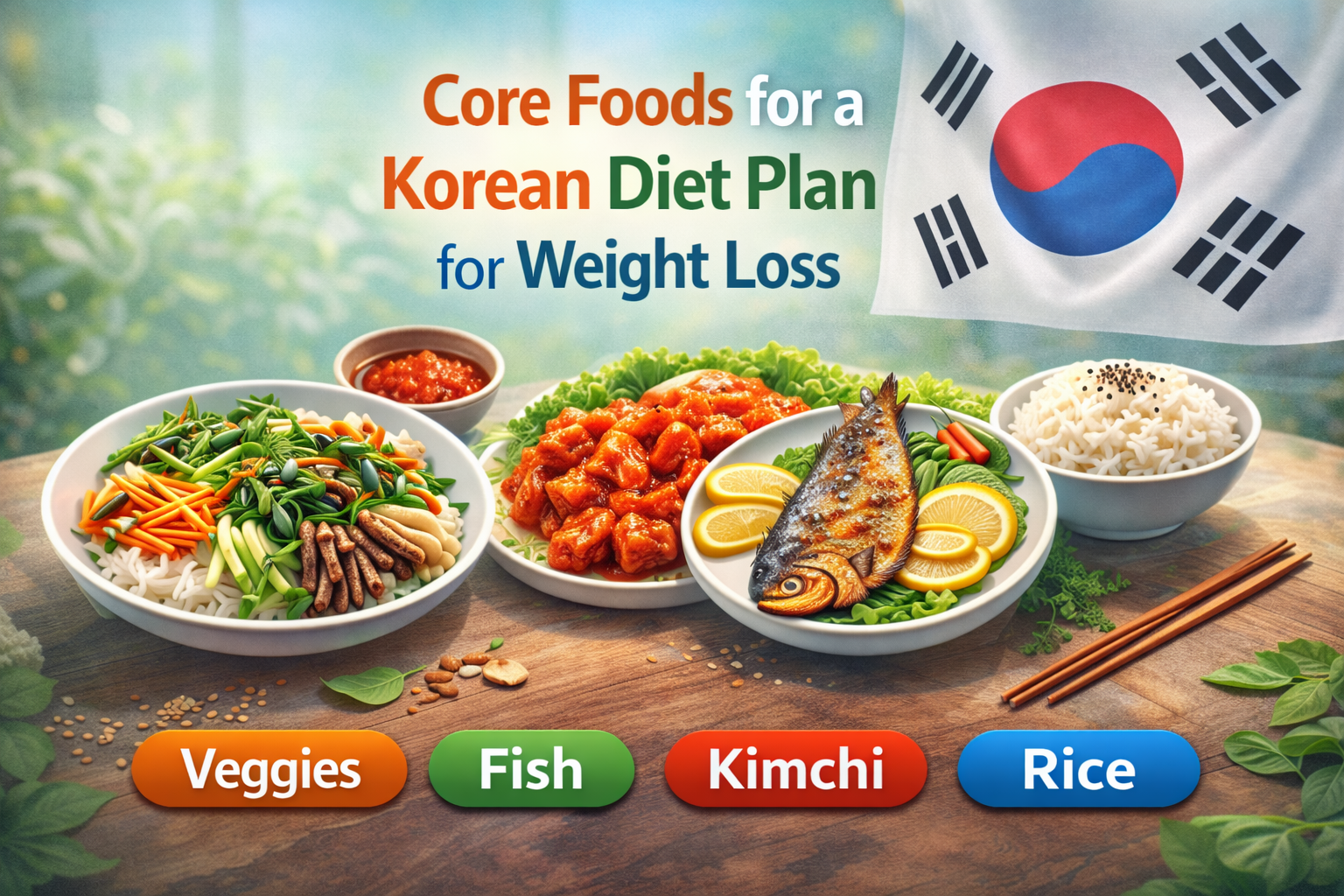
I’m weaving in common Google searches like Korean diet plan for weight loss, Korean weight loss meal plan, Korean diet foods, and Korean weight loss recipes—but always in a realistic, sustainable way.
Vegetables, seaweed, and mushrooms
The backbone of your korean weight loss diet should be vegetables in many forms: leafy greens, cabbage, cucumbers, radish, zucchini, bean sprouts, and spinach-style banchan. Seaweed soups and roasted seaweed can be satisfying, and mushrooms add volume and umami for very few calories.
This is where Korean-style eating shines: you don’t need to eat “less food,” you eat smarter food.
Smart carbs: rice, barley, and portion control
Rice can absolutely fit into a korean weight loss diet. The key is portion size and what you pair it with. If you’re eating mostly rice with a little protein, hunger comes fast. If you eat a smaller rice portion with a strong protein and plenty of vegetables, it becomes a stable, satisfying meal.
A helpful mindset is “carbs as a component, not the whole plate.” If you want an easy upgrade, rotate in barley or mixed grains for more fiber.
Protein choices that support fat loss
Protein is the quiet hero of a korean weight loss diet. Korean meals often include fish, tofu, eggs, lean pork or beef, and seafood. Prioritize grilled, steamed, boiled, or stir-fried with minimal oil. Protein helps with satiety and helps preserve lean mass during weight loss.
If you’re vegetarian, Korean-style tofu soups, pan-seared tofu, and bean-based dishes can still deliver a high-protein pattern.
Flavor boosters: gochujang, doenjang, garlic, and ginger
Korean food is famous for bold flavor, and that’s great for dieting—because bland food is hard to stick to. Gochujang and fermented pastes are being studied for metabolic effects, including in clinical contexts.
But here’s the tradeoff: many Korean condiments and soups can be sodium-heavy. Research on sodium intake in Korea has pointed out that foods like soups and kimchi contribute significantly to sodium intake, and reducing these can reduce sodium overall.
So yes—use the flavor, but measure it. You can also choose lower-sodium versions, dilute sauces, and load up on herbs, vinegar, chili flakes, garlic, ginger, and scallions for intensity without excess salt.
7-Day Korean Weight Loss Meal Plan (Realistic, Not Extreme)
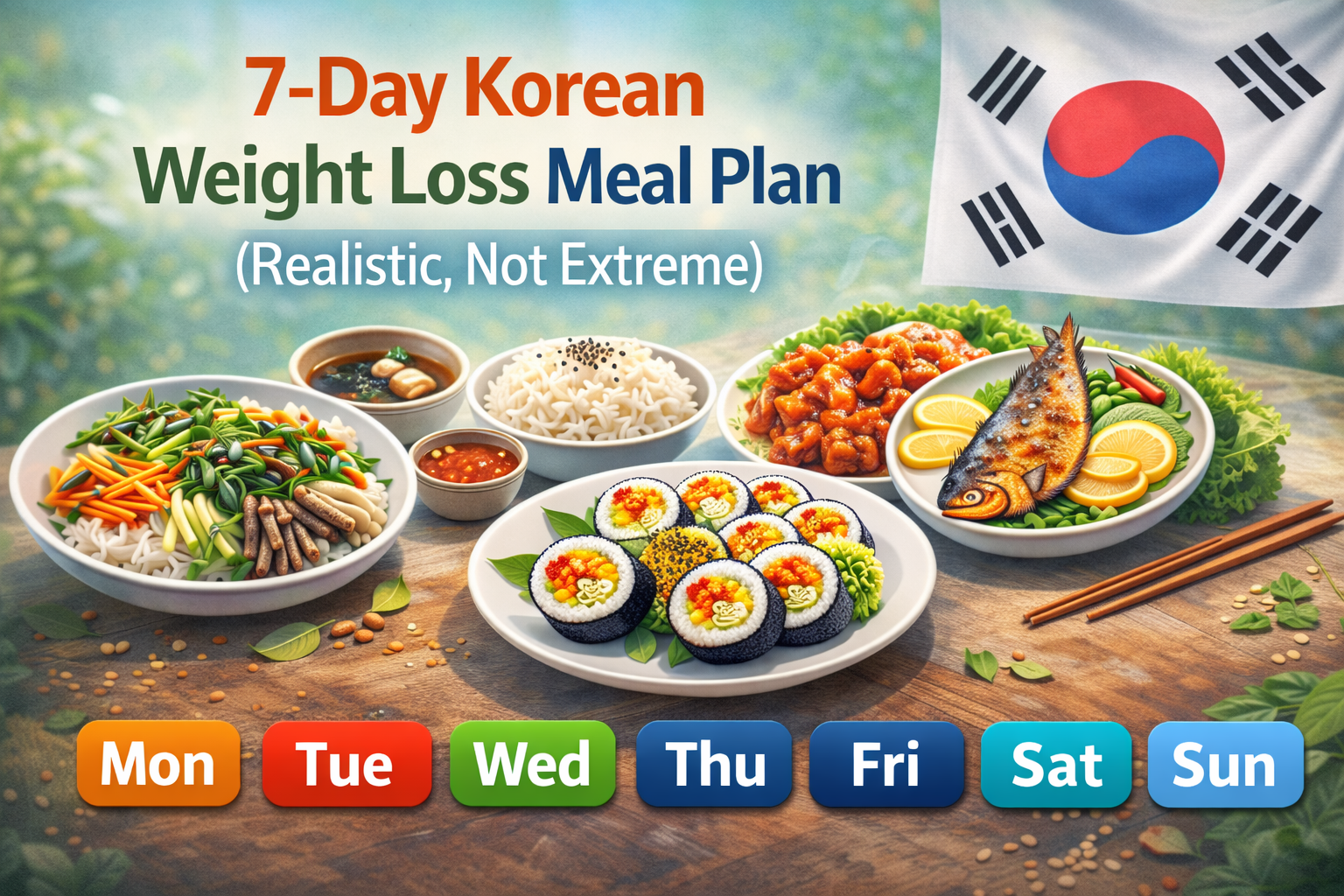
This section targets the high-intent search Korean weight loss meal plan while keeping it practical. Adjust portions to your needs, hunger, and activity level.
Day 1: Start simple. Breakfast can be eggs with sautéed spinach or zucchini plus a small portion of rice. Lunch can be a big bowl of vegetable-rich soup with tofu and a side of kimchi. Dinner can be grilled fish, mixed greens, and a small scoop of rice with sesame and scallions.
Day 2: Build consistency. Breakfast can be plain yogurt or a high-protein option with fruit (if dairy works for you), plus roasted seaweed. Lunch can be bibimbap-style in a “diet-friendly” way: half the bowl vegetables, one palm-sized protein, and a smaller rice base, topped with a measured spoon of gochujang mixed with vinegar. Dinner can be chicken and cabbage stir-fry with mushrooms, keeping oil light.
Day 3: Increase vegetables without increasing calories. Breakfast can be a veggie omelet with kimchi on the side. Lunch can be doenjang-style vegetable soup with tofu and a small rice portion. Dinner can be shrimp or tofu lettuce wraps with cucumbers, carrots, and a light dipping sauce.
Day 4: Focus on protein at each meal. Breakfast can be eggs and a simple soup. Lunch can be a tuna or tofu salad Korean-style (think sesame, scallions, cucumber) plus seaweed soup. Dinner can be lean bulgogi-style beef or a soy-mushroom tofu dish, served with a mountain of greens.
Day 5: Make it “busy-day friendly.” Breakfast can be leftover soup plus protein. Lunch can be a kimbap-inspired bowl: rice base kept small, extra vegetables, and protein like eggs or chicken. Dinner can be spicy kimchi stew made lighter: more tofu and vegetables, less fatty meat, and watch sodium by using less broth concentrate.
Day 6: Keep cravings calm. Breakfast can be protein plus fruit. Lunch can be a big “banchan-style” meal at home: several small vegetable sides, one protein dish, and a controlled rice portion. Dinner can be grilled salmon or tofu with steamed broccoli or spinach seasoned Korean-style.
Day 7: Practice the “repeatable week.” Breakfast can be eggs and greens. Lunch can be a noodle compromise: if you want noodles, choose a smaller portion, add extra vegetables, and include a clear protein—then stop when satisfied, not stuffed. Dinner can be a simple rice bowl with tofu, kimchi, cucumbers, and a light sauce.
If you want to make this even easier, repeat Days 1–3 and rotate proteins. Weight loss loves repetition.
Practical Rules to Make a Korean Diet Plan for Weight Loss Work
Use the “balanced table” approach
Traditional Korean meals often include a base, soup, protein, and side dishes. You don’t need ten side dishes, but you can borrow the idea: add vegetables in more than one form, keep rice moderate, and make protein non-negotiable. Korean dietary guidelines emphasize variety across food groups and planning ahead, which fits perfectly with sustainable fat loss.
Control sauces, not flavor
A korean weight loss diet shouldn’t be bland. But sauces can quietly add sugar and sodium. Start with smaller amounts of gochujang, soy sauce, and fermented pastes, then build flavor with garlic, ginger, vinegar, chili flakes, and scallions.
If blood pressure is a concern, sodium awareness matters. Some research and reporting highlight soups and kimchi as meaningful sodium sources in Korean diets.
Choose cooking methods that keep calories low
Korean cuisine already includes many “diet-friendly” methods like grilling, boiling, steaming, and quick stir-frying. In your korean weight loss diet, prioritize those and reduce deep-fried items to occasional treats.
Make snacks “protein + produce”
This is where many people slip. If you snack, choose a structure that actually satisfies: a protein plus a fruit or vegetable. That aligns with calorie-cutting guidance that favors filling, fiber-rich foods.
Conclusion
A sustainable korean weight loss diet is built on balanced meals, lots of vegetables, satisfying protein, and flavor that keeps you consistent—not on extreme restriction. Keep rice portions reasonable, make soups and fermented foods work for you (not against you), and focus on repeatable habits that create a gentle calorie deficit over time.
If you’re ready to begin, pick two breakfasts, two lunches, and two dinners from this guide and repeat them for the next seven days. Then adjust portions based on your hunger and progress. Start today and commit to your korean weight loss diet for one full week—you’ll learn more from that consistency than from any viral trend.